
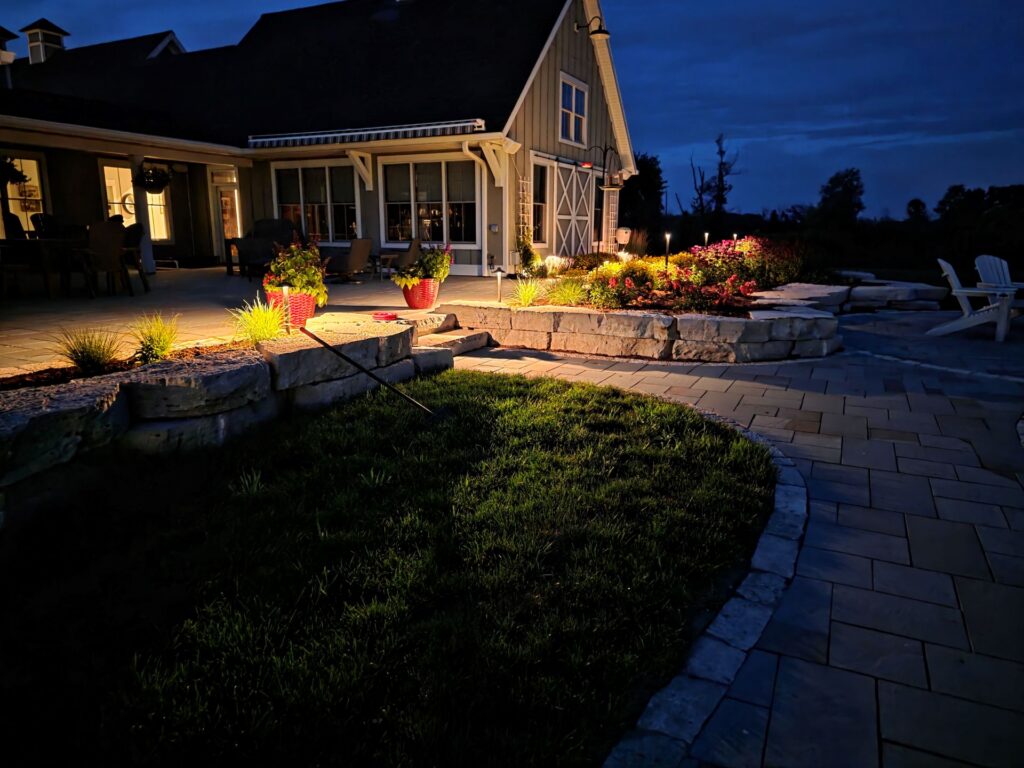
Turn Your Milwaukee Backyard Into a Nighttime Retreat
A dark backyard can feel pretty useless once the sun goes down. With a well-planned outdoor lighting installation in Milwaukee, that same space can turn into a cozy evening hangout for late-summer cookouts, firepit nights, and quiet family time on the patio.
A professional lighting plan does more than drop a few lights along a path. It follows a clear process, from permits and utility marking, to wiring and transformer placement, to a final nighttime aiming visit. That structure keeps your yard safer, keeps your system within local codes, and helps your lights last through years of snow, rain, and freeze, thaw cycles.
Our team works on yards all across Southeast Wisconsin, so we see how local soil, slopes, and city rules affect every project. In this guide, we will walk through each step we follow for a typical Milwaukee backyard, so you know what to expect before anyone starts digging or drilling.
Planning, Permits, and Utility Marking Done Right
Before any shovel hits the ground, we start with planning and safety. Some backyard lighting projects in Milwaukee need electrical permits or inspections, especially when we are tying into existing power or adding new circuits. In many cases, low-voltage lighting has different rules, but it still has to be installed in a safe and professional way.
Using a licensed and insured installer helps protect your home and your family. If something goes wrong or if an inspector needs to review part of the work, you have a clear record of how the system was designed and installed.
One of the most important early steps is the 811 call for utility marking. Calling before you dig is a legal requirement. Here is what usually gets marked in your yard:
- Gas lines
- Electric lines
- Cable and internet lines
- Water and sometimes sewer
These painted marks and flags guide where we can and cannot trench or run wire. They may shift where fixtures go or how we route cables, but they help keep everyone safe and avoid service outages.
We also walk the site with you and look at:
- Drainage patterns and low spots that collect water
- Snow storage areas where plows or shovels push piles
- Hardscape areas like patios, walks, and driveways
- Plant beds and lawn areas you care most about
All of these factors shape fixture choices and wiring paths, and they also affect long-term maintenance. For timing, many homeowners like to plan backyard work in late summer so everything is ready for fall evenings and early winter sunsets. Permits and utility marking can add days to the schedule, so it pays to start a little early.
Trenching vs. Surface Runs for Milwaukee Yards
Next comes the question of how to get power where it needs to go. For low-voltage systems, we usually talk about trenching the wires or running them close to the surface inside protection such as conduit.
Trenching means we bury cable to a typical depth for low-voltage lines, then backfill and restore the yard. It is often the better choice when:
- You are already doing new plantings or lawn renovation
- You are rebuilding a backyard or adding major hardscapes
- You want the cleanest look with no visible wiring at all
Surface or near-surface runs can work along edging, behind retaining walls, or under mulch beds. They make sense when the yard is already well established, when we are going around paver patios, or when the lighting is for a short-term event. In Milwaukee, freeze, thaw cycles are a big deal. Proper burial depth and protection help avoid frost heave pulling on cables, while careful routing keeps wires away from heavy snow-blower paths and ice buildup.
Professional installers are used to working around:
- Tree roots and mature shrubs
- Irrigation lines and drip systems
- Marked utilities and unknown obstacles
Once wires are in, we restore the area by backfilling, tamping soil, and repairing turf. If we cut through lawn, we plan so there is time for reseeding or resodding to take hold before hard freezes, which keeps your yard looking good long term.
Smart Transformer Placement and Circuit Zoning
The transformer is the heart of a low-voltage outdoor lighting installation in Milwaukee. It steps down power and feeds the different lighting zones in your yard. Where we put it matters.
Good transformer placement usually means:
- Close to a reliable power source
- Tucked out of direct view but still easy to access
- Plenty of airflow and clearance, not crammed into a tight corner
- Away from downspouts, low spots, and heavy snow piles
Then we plan the circuits, or zones. This is where your system becomes flexible and easy to live with. For most homes, it makes sense to separate:
- Front yard and backyard circuits
- Path and step lights from accent and tree lights
- High-use areas like patios from lower-use corners of the yard
Careful zoning lets you adjust brightness, schedules, and controls by area, not just all-or-nothing. On larger suburban lots, we also have to think about voltage drop. Long wire runs or too many fixtures on one line can make lights at the far end look dim. We balance loads, pick smart wire routes, and size the transformer correctly so the first and last fixtures look the same.
Control options are another big part of life with outdoor lighting in Wisconsin. Many homeowners like:
- Dusk-to-dawn sensors that track changing daylight
- Smart timers that handle long summer evenings and short winter days
- App-based controls for weekends away or late-night arrivals
When the transformer and circuits are planned well, you get a system that works with your routines instead of fighting them.
Nighttime Aiming, Fine Tuning, and Safety Checks
After everything is wired, buried, and powered, the job still is not finished. Outdoor lighting only truly shows its quality after dark. That is why a dedicated nighttime aiming visit is so important.
At night, we walk the whole yard and adjust each fixture. We aim accent lights so they highlight trees and architecture without shining into windows. We soften any hot spots on walls or fences, and we tweak path lights to avoid glare in your eyes when you walk.
A simple checklist for homeowners during that first week includes:
- Look for trip hazards on steps and paths
- Make sure driveways, walkways, and gates are evenly lit
- Check that patio and deck light levels feel comfortable for guests
- Look from inside the house to see if any fixtures cause glare
Milwaukee seasons bring a few extra details. In fall, days get shorter fast, so timer settings often need small changes. As plants grow, beams might need to be adjusted around thicker shrubs or taller grasses. In winter, bright snow can reflect light and create new glare points, so a quick seasonal review is helpful.
We also document the system: where fixtures are located, how circuits are zoned, and what transformer settings we used. That record makes future maintenance, upgrades, or holiday and event add-ons much faster and easier.
Schedule Your Backyard Lighting Walkthrough Today
Before starting any project, it helps to take a quiet walk through your yard after dark. Notice the dark corners that feel unsafe, the steps that are hard to see, and the trees, stonework, or gathering spots you would love to highlight.
A full-service installer can handle every step, from permits and 811 coordination, to trenching and wire routing, to transformer setup, zoning, and nighttime aiming. For homeowners around Milwaukee and throughout Southeast Wisconsin, planning ahead means your outdoor lighting installation can be ready for relaxed fall evenings, holiday visitors, and those early sunsets that make a well-lit backyard feel like a warm retreat.
Get Started With Your Project Today
Transform your property with professional lighting that looks great and works reliably night after night. Our team at Rocket Lighting can help you plan and complete outdoor lighting installation in Milwaukee that fits your goals, budget, and timeline. If you are ready to discuss your project or request a quote, simply contact us and we will follow up promptly.