
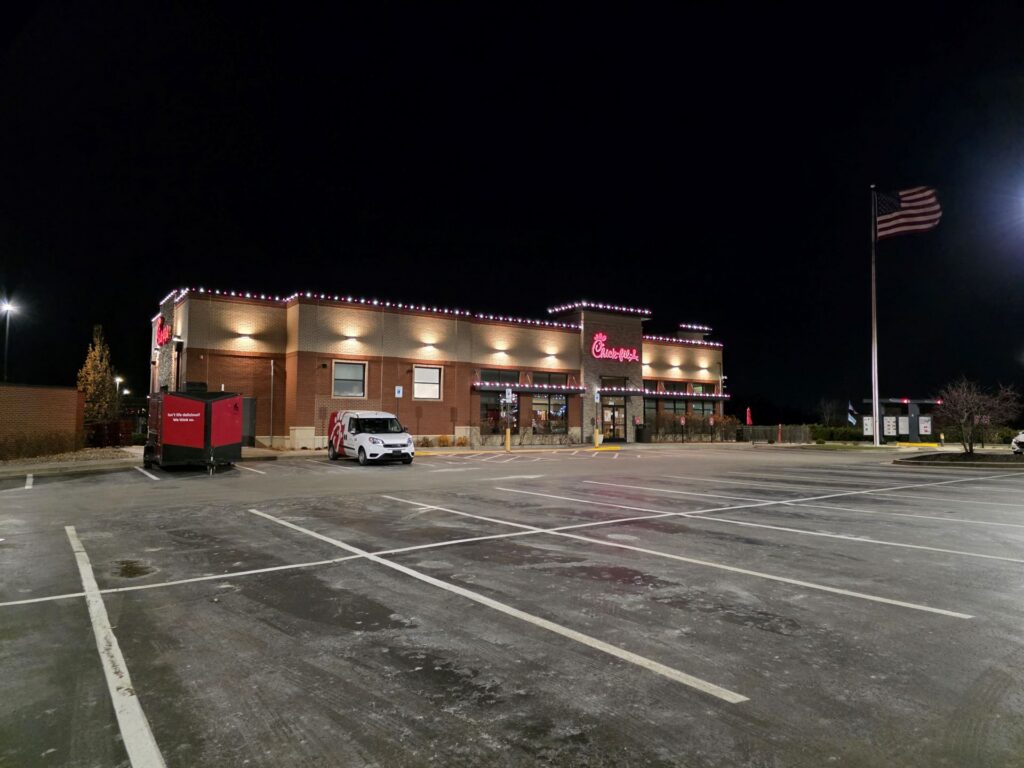
Safer, Brighter Parking Lots Before Winter Hits
Commercial parking lot lighting upgrades are one of the simplest ways to make a property feel safer and more welcoming. As days get shorter in Wisconsin, your lot can go from daylight to darkness right in the middle of your busiest hours. If the lighting is weak, uneven, or full of dark patches, people notice right away.
Early fall is the sweet spot for planning upgrades, before snow piles, ice, and freezing wind turn small lighting issues into big headaches. Good lighting helps lower slip-and-fall risks, makes it easier to spot icy spots, and helps people feel more at ease walking to and from their vehicles. It can also discourage crime and help cameras see what is really happening on your site.
In Southeast Wisconsin, we deal with real Midwest weather: drifting snow, plow piles, blowing salt, and long stretches of gray days. Light poles, fixtures, and wiring all feel that stress. A local lighting team that works in these conditions all the time understands how high fixtures should be, how far poles should sit from driving lanes, and how glare bounces off snow. When you plan upgrades before winter hits, you give your property time to be ready for the darker, colder months.
Why Modern Parking Lot Lighting Matters Now
People expect commercial properties to feel bright, clear, and safe, even when it is dark by late afternoon. That includes:
- Retail centers and strip malls
- Office parks and corporate campuses
- Industrial sites and warehouses
- Healthcare campuses and clinics
Older parking lot lights often create problems. Common issues include:
- Dark pockets between poles where people feel hidden
- Harsh glare that makes it hard to see past the light source
- Color that makes snow, ice, or curbs harder to spot
- Frequent bulb failures that lead to constant service calls
All of that can hurt how people see your brand. A dim, patchy lot can make customers choose a brighter competitor down the road. It can also raise concerns for tenants and employees who work early mornings or late evenings.
Fresh commercial parking lot lighting upgrades improve the whole experience before someone even walks through the door. Better light levels help with:
- Clear wayfinding and easier navigation
- Brighter, more readable signage
- A warmer, more welcoming first impression
Across Wisconsin, many cities are also paying closer attention to outdoor lighting and energy use. They may require certain light levels, limit glare and spillover onto nearby properties, or push for more energy-efficient systems. Upgrading on your own timeline, with a plan that respects local rules and dark-sky goals, can be a smart way to lower risk and avoid rushed changes later.
Key Elements of a Smart Lighting Upgrade Plan
A good upgrade starts with a careful look at what you already have. Professional teams usually begin with a site assessment and photometric layout. That means checking:
- Existing poles and foundations
- Fixture types, wattages, and mounting heights
- Actual light levels on the ground
- Coverage patterns, shadows, and hot spots
Photometric modeling lets you see how a new design will perform before anything is installed. The goal is even coverage, no blind spots, and no pockets of intense glare.
Fixture selection is another key step. Modern LED area lights, wall packs, and pole-mounted fixtures come in many shapes and outputs. Important choices include:
- Mounting style, such as on poles or on building walls
- Light distribution patterns to cover drive lanes and parking rows
- Color temperature that balances security and comfort
Cooler light can feel brighter and may help with visibility on snow, while warmer light can feel more inviting. Many properties choose a middle ground that delivers both safety and comfort.
Controls and automation help keep energy use in check without giving up safety. Common tools include:
- Dusk to dawn photocells that turn lights on and off with natural light
- Motion sensors in low-traffic areas
- Smart scheduling that dims lights during late, quiet hours
In Wisconsin, we also have to think about winter stress. That means checking the condition of underground wiring, bases, and pole strength. Poles need to stand up to high winds and plow spray. Mounting heights should work even when snow piles grow under the fixtures and change how the light hits the ground.
How Commercial Parking Lot Lighting Upgrades Pay Off
Upgraded parking lot lighting is more than a nice visual touch. It can pay off in many ways over time.
LED fixtures commonly use much less energy than older lamp styles. They also tend to last longer, which means fewer:
- Bucket truck visits
- Emergency repairs
- Burned-out lamps that sit dark for weeks
Better lighting helps support safety and security. Brighter, more even light can:
- Lower slip-and-fall risks in icy or wet conditions
- Make it harder for people to hide between cars or around corners
- Give existing security cameras a much clearer image
For tenants and customers, a bright, clean lot is reassuring. It tells people that the property is cared for and that their well-being matters. That can help keep current tenants happy, draw new businesses, and support stronger traffic during dark winter afternoons and busy shopping seasons.
From an ownership point of view, commercial parking lot lighting upgrades also support long-term property value. A modern, efficient system that already meets or exceeds common lighting and energy expectations can make it easier to meet new rules as they arrive and can help the property stand out when compared to older, outdated sites.
Seasonal Strategies for Wisconsin Parking Lots
Parking lots in Southeast Wisconsin need to work in some tough seasonal conditions. Snow and ice change everything. When planning lighting for winter, it helps to think about:
- Where plows push snow and how high piles might get
- How reflective snow can bounce light into drivers’ eyes
- How ice can hide in shadows or along curbs
Fixture placement, beam angles, and pole height should all account for these shifts. Poles set too close to driving lanes may get clipped by plows. Fixtures aimed too low may shine straight into windshields once snow piles up underneath.
Starting upgrades in early fall helps avoid cold-weather delays. It also means your lot is ready for:
- Extended shopping hours
- Evening events
- Increased traffic during darker, colder months
Equipment choice matters too. In our climate, it is smart to choose:
- Corrosion-resistant poles and hardware
- Sealed fixtures that keep out moisture and road salt
- Suitable IP ratings for snow, slush, and freezing rain
A basic maintenance plan keeps your upgrades working well. Good habits include:
- Inspecting poles, bases, and fixtures before and after winter
- Cleaning lenses so light is not blocked by dirt or salt film
- Checking aiming after heavy storms or plow work
- Looking for damaged wiring covers or junction boxes
What to Expect From a Professional Upgrade Partner
Working with a professional lighting partner keeps upgrades organized and less stressful. A typical process starts with discovery and consultation. That might include a walk around your property, reviewing current lighting, and talking through security concerns, branding goals, and budget limits. It is also the time to point out dark corners, problem areas, and any past issues with ice, glare, or plow damage.
Next comes a customized design and proposal. A solid plan usually includes:
- Photometric layouts that show expected light levels
- Fixture types, outputs, and color recommendations
- Control strategies that match your hours and traffic patterns
- Clear options so you can align the project with capital plans
During installation, experienced crews should work around your operations as much as possible. That may mean staging work in sections, blocking off only a few parking rows at a time, and coordinating with tenants or security. The goal is to keep people moving safely while the new system goes in.
After the upgrade, ongoing support helps protect your investment. This can include warranty guidance, periodic check-ins, and help adjusting controls or adding fixtures as your site changes. A good partner will treat lighting as a long-term part of your property strategy, not a one-time project. For commercial parking lot lighting upgrades in Southeast Wisconsin, teams like ours at Rocket Lighting focus on designs that handle real local weather and keep lots safer and brighter through every season.
Get Started With Your Project Today
If you are ready to improve safety, visibility, and energy efficiency in your lot, our team can help plan and execute your commercial parking lot lighting upgrades from start to finish. At Rocket Lighting, we evaluate your current setup, recommend smart improvements, and handle a smooth installation with minimal disruption. Tell us about your property, timeline, and budget, and we will put together a tailored solution. Have questions or need a quote quickly? Contact us and we will respond promptly.