
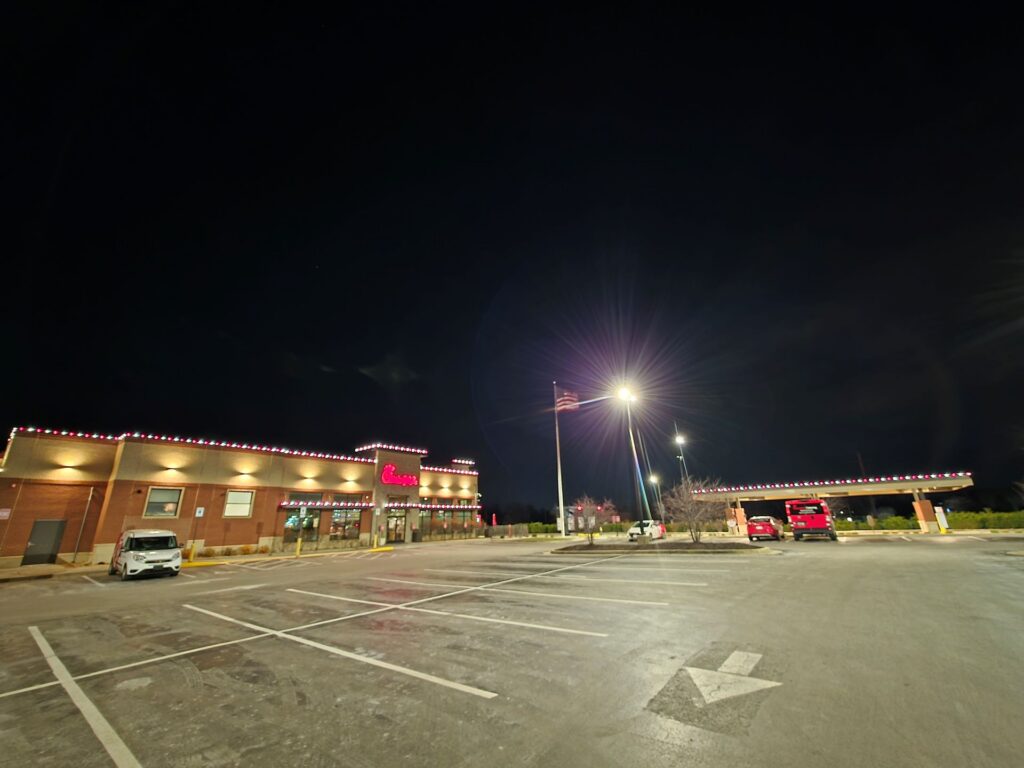
Poor parking lot lighting can make a property feel unsafe long before anyone reaches the front door. During Southeast Wisconsin’s darker fall and winter months, uneven light, harsh glare, shadowed walkways, and unreliable fixtures can affect driver visibility, employee comfort, customer confidence, and the overall appearance of your property.
When planning commercial parking lot lighting upgrades, you may have two main paths: retrofit the fixtures you already own with LED components or replace them with new luminaires. At Rocket Lighting, we look at the full site before recommending either option because the right choice depends on far more than the lamp inside a fixture.
Start with the Full Lighting System
A parking lot lighting project should begin with a close look at what is already in place. Older fixtures may still sit on solid poles with dependable wiring, making an LED retrofit a practical option. In other cases, worn housings, loose mounting hardware, corroded equipment, or weak poles can point to a larger replacement need.
During a professional site review, we examine the condition of the system from the fixture down to the electrical connections. Important areas include:
- Fixture housings, lenses, seals, and mounting hardware
- Poles, arms, bases, and signs of corrosion or movement
- Underground wiring, electrical capacity, and existing controls
- Current light levels across driving lanes, sidewalks, and parking spaces
The layout matters just as much as the equipment. A fixture may turn on every night but still fail to light the right places. We measure coverage at entrances, crosswalks, accessible parking spaces, loading areas, dumpster locations, and other spots where people and vehicles move after dark.
A photometric lighting plan can make hidden problems easier to see. It maps light levels across the property and can reveal dark pockets, overly bright areas, poor uniformity, and glare. A quick walk through the lot may show an obvious burned-out fixture, but a lighting plan helps us see whether the entire layout supports safe, comfortable visibility.
When LED Retrofits Make Sense
An LED retrofit updates an existing fixture with newer LED lighting components. When the poles, fixture housings, wiring, and placement are still in good shape, this approach can preserve useful infrastructure while improving the quality of the light.
Older metal halide and high-pressure sodium systems often create uneven color, slow startup times, and frequent maintenance needs. LED technology provides immediate illumination and more consistent color quality, which can make curbs, signs, pedestrians, parked vehicles, and pavement easier to see.
Retrofits can work well when your existing system has a sound foundation. We may recommend this direction when:
- Fixture housings remain weather-tight and structurally sound
- Pole locations already provide good coverage throughout the lot
- Electrical equipment can support the planned LED components
- Your current layout does not create major glare or dark areas
For lots that operate from dusk until dawn, LED retrofits can reduce the need for repeated lamp replacements and help maintain more dependable illumination through long winter nights. They can also work with modern controls, depending on the equipment already installed.
Still, a retrofit should not simply preserve old equipment for the sake of preserving it. Aging housings may have damaged seals, worn parts, heat concerns, or limited compatibility with newer controls. If the remaining fixture components are close to the end of their useful life, replacing only the light source may not give you the dependable result you need.
When New Fixtures Solve Bigger Problems
New fixtures are often the better answer when the problem is bigger than the lamp or internal components. If your parking lot has expanded, traffic patterns have changed, or current poles and fixtures leave large areas in shadow, a fresh lighting design may provide a more complete improvement.
Modern outdoor commercial luminaires can offer improved optics and beam control. That means we can direct light where it helps drivers and pedestrians most, rather than sending excessive light into windows, neighboring properties, or the night sky. Better distribution can improve visibility at building entrances, sidewalks, loading zones, and vehicle travel lanes while reducing uncomfortable glare.
New fixtures are also designed for outdoor conditions. Wisconsin properties can face rain, snow, ice, changing temperatures, and road salt, all of which can take a toll on aging equipment. Durable housings, sealed components, and corrosion-resistant materials can help a lighting system hold up better over time.
Some projects may involve more than fixture replacement. We may find that the site would benefit from pole repairs, new poles, upgraded wiring, or revised fixture locations. Although that requires more planning, it also gives you the chance to correct underlying issues instead of working around them.
Match the Lighting Plan to Your Property
The best commercial parking lot lighting upgrades are shaped by how people use the property. An office building that is mostly empty in the evening has different lighting needs than a retail center with steady nighttime traffic. A loading area may need focused visibility for deliveries, while a main entrance needs welcoming, even light for visitors arriving on foot.
Before choosing retrofits or new fixtures, we consider factors such as:
- Hours of operation and seasonal changes in daylight
- Vehicle traffic, pedestrian routes, and security concerns
- Nearby homes, landscaping, and potential spill light
- Areas where snow, ice, curbs, or signs may be difficult to see
This broader view helps prevent decisions based only on wattage or fixture appearance. A brighter light is not always a better light. Too much brightness in one area can create glare and make nearby shadows seem even darker. Good lighting balances visibility, comfort, coverage, and control.
Review Conditions Before Winter Weather Arrives
Late October is a useful time to review parking lot lighting because earlier sunsets make coverage issues easier to spot. A nighttime inspection can show where drivers struggle to see curbs, pedestrians, signs, parked vehicles, or icy walking surfaces. Planning before snow and frozen ground arrive also gives property teams time to address electrical concerns and create a sensible installation schedule.
Whether a retrofit or new fixture is the better fit, the decision should come from the condition of your site and the way people use it after dark. A professional evaluation can identify immediate safety concerns, compare the practical value of each option, and create a clear plan for reliable illumination through winter and the rest of the year.
Improve Visibility With the Right Lighting Plan
Rocket Lighting helps property owners prioritize durable, efficient solutions that support safer parking areas and smoother daily operations. Explore our commercial parking lot lighting upgrades to see how we can address your property’s needs. When you are ready to discuss your project, contact us for practical guidance and next steps.