
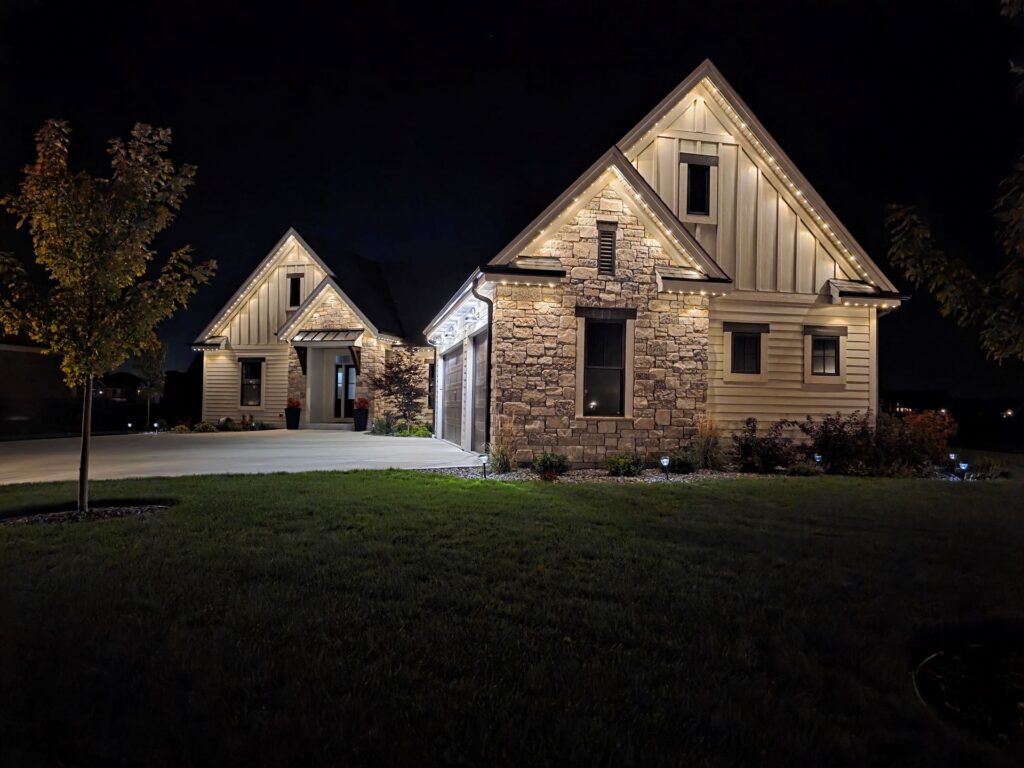
When you spend time and money on beautiful outdoor lighting, you expect it to last. All it takes is one strong storm or a power spike to knock out transformers, damage fixtures, or scramble smart controls. Many Wisconsin homeowners do not find out about surge protection until after they have already had a problem.
Outdoor lighting surge protection installation helps keep your system working through storms, outages, and everyday power hiccups. In our Wisconsin yards, with regular thunderstorms and winter weather, this kind of protection is especially important. We will walk through how surges damage lighting, why our area is so risky, what proper protection looks like, and how professional installation helps keep your system safe.
Protect Your Yard Lighting From Wisconsin Power Spikes
A power surge is a sudden, short jump in voltage on your electrical system. It can come from lightning in a storm, problems on the utility lines, or from large equipment turning on and off. Your outdoor lighting, sitting outside in the ground and tied into your home’s power, gets hit along with everything else.
Lighting in Wisconsin yards is at higher risk because of:
- Frequent thunderstorms and lightning
- Aging power lines and equipment in some neighborhoods
- Storms and winter outages that cause power to snap on and off
A single surge can fry a transformer in an instant. Smaller surges may only leave small scars inside the components, but those add up over time. With smart design and outdoor lighting surge protection installation, your system can handle these hits much better, so you get more years out of your lights and far fewer headaches.
Our team at Rocket Lighting works across Southeast Wisconsin, so we see firsthand what local storms and power events do to outdoor systems. That experience shapes how we design and protect lighting for homes and businesses here.
How Power Surges Damage Outdoor Lighting
Not all surges are the same, but they all travel through your wiring looking for a path to ground. Outdoor lighting often ends up on that path.
There are two common types of surges:
- Lightning-induced surges from strikes on or near power lines, trees, or the ground
- Utility and equipment surges from downed lines, switching at the power company, generator start-ups, and big appliances cycling
Here is how a surge usually moves through your property:
- It enters on the utility service line and hits your main electrical panel.
- From there, it travels into branch circuits and out to low-voltage transformers that feed your yard lighting.
- It continues along the low-voltage wiring into fixtures, LED drivers, and smart controllers.
The damage can show up in different ways:
- Instant burnout of transformers or fixtures, sometimes with a pop or smoke
- Hidden internal damage that weakens parts so they fail months later
- Strange, hard-to-trace issues like random shutdowns, flickering, or zones that will not stay on
Winters in Wisconsin add more risk. Ice storms, heavy wet snow, and rapid freeze-thaw cycles can knock out power again and again. Each time power is restored, a surge can ride in on the line. Repeated on-off events are tough on delicate electronics in LED and smart lighting systems.
Why Wisconsin Yards Need Surge Protection
Our weather patterns make surge protection more than just a nice extra. Summer storms bring loud thunder, sharp lightning, and high winds that can drop branches on lines. In colder months, snow and ice can weigh down poles and wires. All of that creates unstable power.
Homeowners in Southeast Wisconsin often notice:
- Landscape lights flickering during storms
- Timers or smart controllers randomly resetting
- Breakers that trip for no clear reason
- Having to replace the same fixtures or transformers more than once
Outdoor systems are especially exposed because:
- Long cable runs act like antennas for nearby lightning energy
- Buried wires sit in wet soil that affects grounding
- LED drivers and smart controls near the ground are sensitive to even small surges
- Connections can corrode, which can make surge problems worse
When you compare the risk to the cost of protection, the choice is pretty clear. A modest investment in outdoor lighting surge protection installation often prevents repeated repairs, replacement parts, and service visits over the life of the system.
Key Components of a Surge-Protected Lighting System
Good surge protection works in layers. Each layer catches more of the extra energy before it reaches your lighting.
A strong setup often includes:
- Whole-home surge protection at the main electrical panel as the first shield
- Secondary surge protection devices at low-voltage transformers and control boxes
- Weather-rated, grounded wiring with clean, tight connections in the yard
Whole-home surge protection helps block large surges before they spread. It does not replace local protection at the lighting system, but it gives everything in your home a better starting point.
Secondary protection is placed closer to the lighting. Surge protection devices rated for outdoor and low-voltage use can be installed at:
- Main low-voltage transformers feeding your yard
- Smart control panels or outdoor control boxes
- Key branching points where long runs split off to different zones
Fixture-level and circuit-level details also matter. Proper grounding, outdoor-rated junctions, and components tested for outdoor surge environments help the entire system stand up to spikes.
Modern smart and color-changing lights add even more reason for layered protection. Their small electronic parts can give us great control and beauty, but they also react faster to bad power. In our climate, protecting them well is important for both homes and businesses.
Professional Surge Protection Installation Steps
Outdoor lighting surge protection installation is not just a matter of snapping in a few parts. A professional installer will usually:
- Evaluate your main panel, existing surge protection, and outdoor circuits.
- Review current and planned lighting zones, transformers, and control gear.
- Choose surge protection devices with ratings that match the system size and layout.
- Place devices where they will catch surges early but still be serviceable.
Pros pay close attention to:
- Distance of cable runs and how they might collect surge energy
- Areas of the yard that see more lightning exposure, such as open spaces or tall trees
- Moisture, soil conditions, and how they affect grounding and corrosion
Safety and code rules always come first. That includes proper grounding and bonding, using UL-listed equipment, and following Wisconsin and local municipal electrical requirements.
A specialized outdoor lighting company like Rocket Lighting deals with these details every day. That focus helps reduce the risk of gaps, missteps, or code issues that can happen when surge protection is treated as a quick add-on by someone who does not work with lighting systems regularly.
Seasonal Timing Tips for Wisconsin Homeowners
You can add surge protection at any time, but timing it around our local weather patterns can make life easier. Late summer is often a good window, since there are still warm days to work outside and storm season is far from over.
A few helpful seasonal habits:
- In spring, after the ground thaws, have connections and protection checked.
- Before putting up any big holiday displays, confirm that surge protection is in place and working.
- After major storms or outages, schedule an inspection if you notice any odd behavior from your lights.
Surge protection also fits well with upgrades. It is smart to talk about it when:
- Adding permanent holiday lighting or new color-changing zones
- Expanding lighting to new areas of the yard or around a new patio or deck
- Making major electrical changes like adding an EV charger, hot tub, or new AC unit
Tying surge protection into these projects keeps your whole system working as one, instead of as separate pieces added over time.
Secure Your Outdoor Lighting Investment Before the Next Storm
Outdoor lighting should make your yard feel safe and welcoming, not fragile and stressful. With the right surge protection in place, your fixtures, transformers, and smart controls are far more likely to keep working through our Wisconsin storms and winter outages. That means fewer surprises, fewer dark paths, and more time enjoying your outdoor spaces.
At Rocket Lighting, we design and install professional outdoor, commercial, event, and permanent holiday lighting across Southeast Wisconsin, and surge protection is a core part of how we protect that investment. Treating it as a basic building block, not an extra, helps your system last longer, stay safer, and perform the way it should, season after season.
Get Started With Your Project Today
Protect your property and budget by having our team design and install the right surge protection for your outdoor systems. At Rocket Lighting, we handle every detail of your outdoor lighting surge protection installation so your fixtures stay reliable in all conditions. If you are ready to upgrade or safeguard your current setup, reach out and let us walk you through your best options. Have questions or need a quote fast? Just contact us and we will respond promptly.