
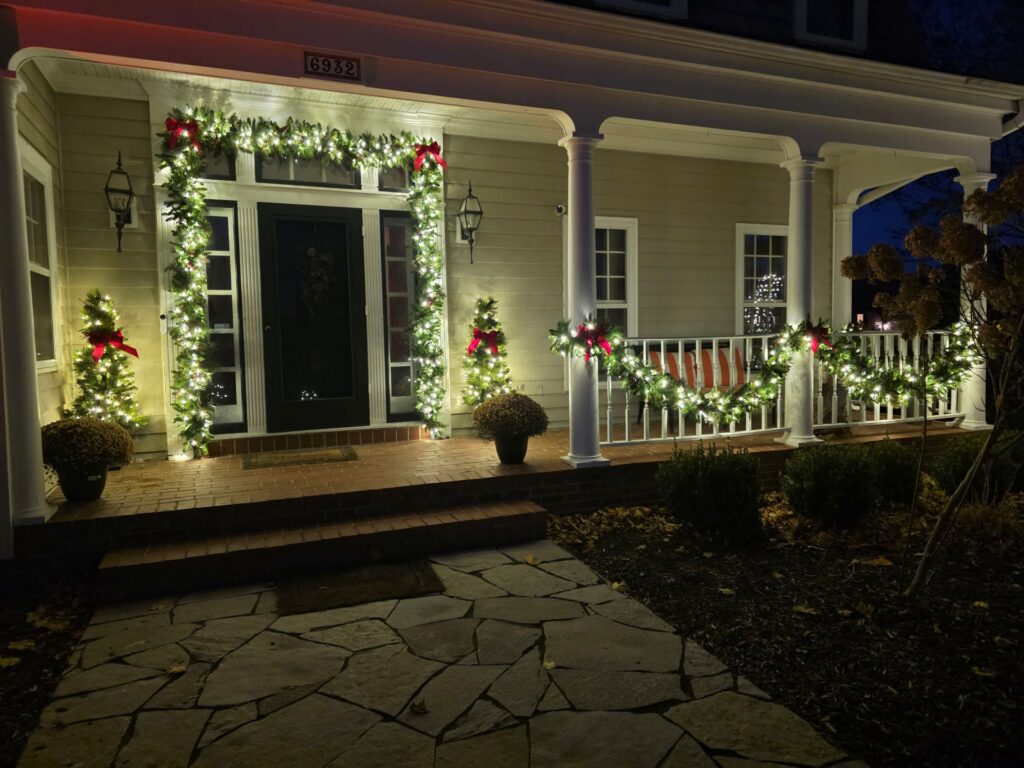
Design-First Holiday Lighting That Looks Great Year-Round
Permanent holiday lighting should feel like part of your roofline, not a seasonal gadget that happens to live there all year. When the lights are off in broad daylight, the system should blend into your trim and siding so the house or building still looks clean and well designed.
That is why decisions about trim tracks, diode spacing, and concealment are so important. The choices you make before installation will decide if the system looks built-in or tacked on for the other eleven months of the year. In Southeast Wisconsin, we also have to think about snow lines, ice, steep roofs, and all the different styles we see from lake cottages to brick offices.
At Rocket Lighting, we design and install outdoor lighting systems across this area and we approach permanent holiday lighting like an architectural detail. Below, we focus on design and hardware choices, with practical points you can use to ask better questions before you commit to a system or installer.
Matching Trim Tracks to Wisconsin Architecture
Trim track style shapes how the lighting looks both day and night. The profile, shape, and depth of the track control how much of the LEDs and wiring you see and how crisp the line appears after dark.
Common track styles include:
- Flat fascia-mounted tracks that sit right on the face of the trim
- Crown style tracks that mimic decorative molding lines
- Soffit-integrated tracks that tuck higher up under the overhang
Flat fascia tracks often work well on vinyl siding and aluminum fascia, where clean, straight lines are already a big part of the look. Crown-style tracks can suit homes with more detailed trim or LP SmartSide accents. Soffit-integrated tracks can pair nicely with brick or stone fronts, where you want the lighting line to sit just above the masonry and disappear into the shadow under the eaves.
Color and finish matter just as much as shape. For most Wisconsin homes, we like to:
- Match the track color to the fascia or soffit
- Keep finishes matte or low sheen, not glossy
- Align tracks with existing gutter or trim lines
On commercial buildings, a slightly contrasting color can work along strong accent bands or parapet caps, but on homes it often calls too much attention to the track itself instead of the architecture.
Mounting location also protects your hardware. In a state that sees heavy snow, ice dams, and wind-driven rain, we usually aim for:
- Under-soffit or protected fascia mounting when possible
- Angles that point the light out and slightly down, not straight at windows
- Positions that sit above typical snow buildup on lower roofs
This helps the system last longer, reduces glare into bedrooms or offices, and keeps the light wash even across gables and peaks.
Getting Diode Spacing Right for Clean, Even Light
Diode spacing is how far apart each LED sits in the track. It has a big impact on how the light looks at night, how smooth animations feel, and how much attention you draw to the individual dots.
Tighter spacing, like around 3, 4 inches, gives:
- Higher light density
- Stronger outlines around peaks and rooflines
- More defined individual points of light
Wider spacing, like around 6, 9 inches, tends to:
- Show fewer individual dots from the street
- Create a softer, more even glow
- Feel more like architectural lighting you can leave on year-round
For holiday outlines with bold patterns, tighter spacing can look great. For subtle everyday accent lighting, slightly wider spacing usually feels more refined, especially when paired with warm white tones.
Spacing also works together with permanent holiday lighting control systems. Good control lets you dim brightness, soften colors, and slow down animations. When spacing and control are planned together, you can:
- Avoid harsh hot spots on light brick or siding
- Keep the glow gentle on quiet residential streets
- Still have plenty of pop for game days and holidays
In Wisconsin, snow reflection is another factor. When the ground is white, lights feel brighter. For many residential rooflines, moderate spacing with the ability to dim the lights is a smart sweet spot. On commercial parapets or accent lines above signage, spacing can shift depending on how visible you want the building to be from main roads and parking lots.
Concealment Strategies for Daytime Curb Appeal
Good concealment is what makes the system look intentional when it is off. The simplest way to do this is to follow lines that already exist on the building.
We try to:
- Run tracks tight to fascia edges and gutter lines
- Follow brick or siding transitions instead of cutting across them
- Nest the track into shadow lines under soffits or trim pieces
When the track sits in a natural shadow or along a strong architectural line, the wiring and diodes almost disappear in daylight.
Hiding wires, seams, and hardware takes planning before anyone drills a hole. Typical strategies include:
- Routing wiring behind fascia or into attic spaces when access allows
- Running drops along downspouts or vertical corners with color-matched conduit
- Placing connectors and joints at gable returns or other natural break points
The goal is that, from the sidewalk or driveway, you see a simple, clean outline, not a chain of boxes, wires, and small parts.
We also think about all four seasons. In winter, bare trees mean more of the house is exposed, so sloppy routing stands out more. In summer, when landscaping is full and people gather on patios and decks, you want the tracks to disappear into the trim so the focus stays on the outdoor space, not on hardware at the roofline.
Smarter Control Systems That Support Your Design
Permanent holiday lighting control systems are more than a remote. They are part of the design, because they decide how the light actually looks on your home or building from day to day.
When trim tracks, diode spacing, and concealment are dialed in, you want a control system that can:
- Fine-tune brightness levels
- Shift from bold holiday colors to soft, warm white
- Run smooth animations without flicker or harsh jumps
Without good control, even a nicely installed system can feel like a theme park on nights when you just want subtle elegance.
Features that help protect curb appeal include:
- Preset architectural scenes with simple warm lighting
- Wide dimming range so you can go from bright party mode to soft evening glow
- The ability to save favorite low-key settings for everyday use
Scheduling and calendar tools are also helpful. They let you move from summer patio scenes to fall game day colors to simple Christmas looks without playing with the app every night.
Since we work in Wisconsin weather, we also care about how the control gear handles cold snaps, heat waves, and constant freeze-thaw cycles. Remote access and automation are especially helpful when nobody wants to walk through snow or ice to adjust a box on the side of the house.
Work with a Pro Partner for Seamless, Built-in Results
All the small choices about tracks, spacing, and concealment add up. When they are planned well, the system feels like part of the building. When they are not, it can look cluttered and distracting, even when the lights are off.
A professional installer that understands both design and permanent holiday lighting control systems can look at your architecture, local conditions, and how you plan to use the lights all year. For our projects across Southeast Wisconsin, we typically start with an on-site look at the rooflines, trim colors, siding or brick, and any HOA or commercial guidelines. From there, we match trim tracks, suggest diode spacing for each area, plan wire concealment, and set up control scenes that fit how the property is used through all four seasons.
Get Started With Your Project Today
Transform your property with professionally designed permanent holiday lighting control systems tailored to your space and goals. At Rocket Lighting, we listen to your vision and create a plan that’s efficient, reliable, and easy to manage year-round. If you are ready to explore options or schedule a consultation, contact us and we will help you take the next step.