
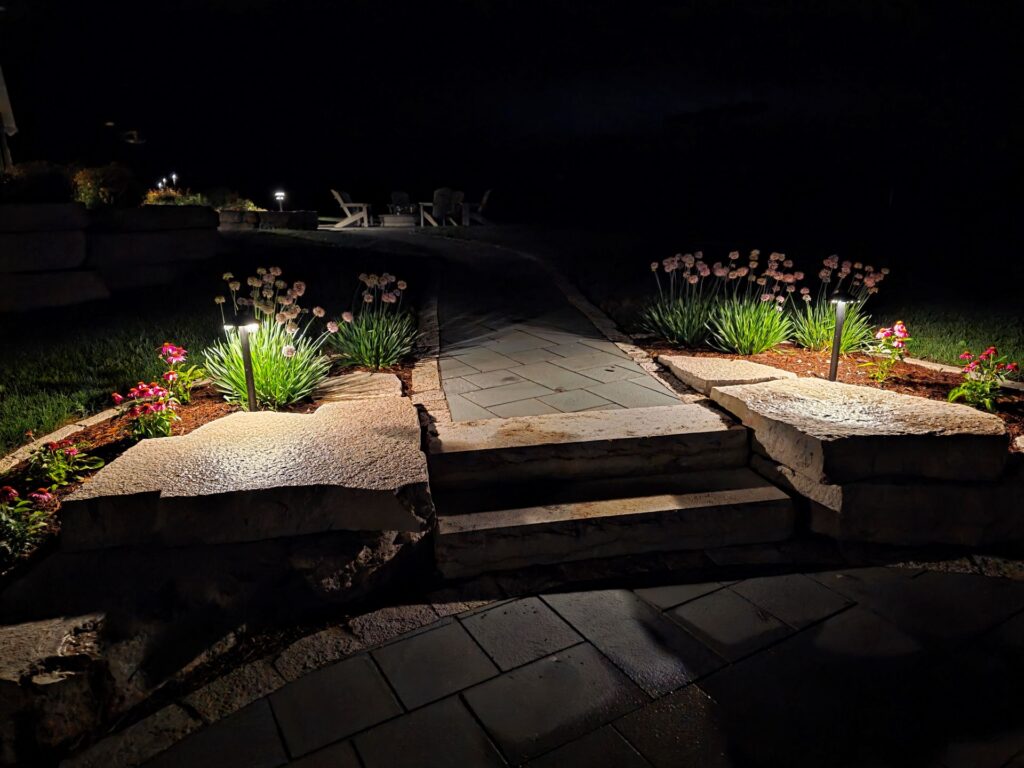
Light Your Racine Garden to Look Better Every Year
Good garden lighting should not just look nice right after it is installed. It should keep looking better as your plants grow, your family changes, and Wisconsin weather does its thing. In a Racine backyard, that means planning for snow, heat, rain, and lots of green growth, not just a quick glow for one summer.
In this article, we will walk through how to plan garden lighting in Racine that ages well. We will talk about seasons, long-term use, fixture choices, and simple tweaks that keep your yard welcoming year after year. As a local outdoor lighting team here in Southeast Wisconsin, we care a lot about getting that balance right so your lights do not feel dated or out of place after a few seasons.
Planning for Racine’s Seasons and Your Long-Term Vision
Garden lighting that lasts starts with two big ideas: real Wisconsin weather and how you hope to live in your yard in the future.
Racine has:
- Bright summer evenings
- Dark, snowy winters
- Muddy springs
- Colorful fall weeks
Your lighting should work in all of them. That means thinking about how your yard looks with full leaves in July, bare branches in January, and everything in between.
It also helps to picture how you will use the space, such as:
- Big gatherings on the patio
- Quiet nights by a fire pit
- Kids running around after dark
- Pets going out safely in winter
Paths, gates, steps, and seating areas often change as you add features like a bigger deck, a hot tub, or a new seating area. When we plan garden lighting in Racine, we like to think 5 to 10 years ahead. A small tree now might become a major focal point later. A tiny planting bed may grow into a wide border. Your lighting plan should be able to shift along with that.
Designing Layers of Light That Mature with Your Garden
Instead of blasting one bright light across the whole yard, the best long-term plans use layers of light. This helps your garden look natural and flexible as it matures.
We usually think in three layers:
- Ambient light: A soft overall glow that makes the yard feel welcoming. This can be gentle downlighting from trees or structures and low, even light along the edges of patios.
- Task light: Focused light where safety matters, such as steps, pathways, driveway edges, and grilling or outdoor kitchen areas.
- Accent light: Highlighting special features like a favorite tree, a water feature, a trellis, or a stone wall.
Layers age better than a single bright floodlight, because you can adjust one part without redoing everything. Maybe a tree grows taller and needs a stronger uplight, while the path lighting stays just right.
Fixture placement matters too. We like to:
- Keep many fixtures near borders or in mulch where they can be moved
- Avoid tucking lights deep inside fast-growing beds
- Use mounting options on walls, fences, or trees so angles can be changed
Subtle light nearly always looks better over time than harsh glare. Soft, indirect light creates a classic look that does not scream for attention. It is easier on your eyes, better for neighbors, and kinder to nighttime views of the sky.
Smart Fixture and System Choices for Wisconsin Conditions
Racine backyards see freezing, thawing, driving rain, and wind. Your lighting fixtures and wiring need to handle all of that for years.
For fixtures, we typically recommend:
- Brass or copper housings that age nicely instead of cracking
- High-quality powder-coated metals for a clean, long-lasting finish
- Sturdy stakes and mounts that stay put in soft or frozen ground
LED technology is a big part of long-lasting garden lighting in Racine. Warm white LEDs usually look best outdoors, giving a cozy feel that works well with brick, stone, wood, and greenery. Adjustable beam spreads let us change how wide or narrow the light appears on a tree or wall as it grows or as the space changes. Dimmable systems are helpful too, so you can tone things down for late nights or turn key features up for gatherings.
The hidden parts matter just as much as what you see:
- Wiring should be buried deep enough and protected properly to handle freeze-and-thaw cycles
- Connections need to be secure and weather-resistant
- Transformers should have room for future expansion, so new lights can be added without redoing the whole system
Smart controls are another tool that help systems age well. With the right setup, your schedule, brightness, and scenes can change without digging up the yard again.
Lighting Plants and Hardscapes That Change Over Time
Plants never stop growing, so lighting has to be planned for their future size, not just their current look. A small ornamental tree that is 8 feet tall now might reach well above the roofline later. We aim fixtures so they will still look good as the canopy fills in and spreads.
Good long-term lighting:
- Anticipates taller, wider trees and shrubs
- Uses adjustable fixtures that can be re-aimed as plants fill out
- Leaves room around fixtures so they are not swallowed by growth in a year or two
It is also smart to prioritize features that do not move, such as:
- Paths and walkways
- Stone walls, steps, and retaining walls
- Pergolas, fences, and arbors
- Water features or boulders
These hardscape elements usually stay put for decades, so they are a strong base for a lighting plan that needs to feel stable as your plants change.
Some common mistakes we try to avoid include:
- Spotlighting tiny new shrubs that quickly outgrow the light beam
- Placing path lights where mulch or plants will soon bury them
- Forgetting that trees will throw more shade as they grow, which can darken certain areas
- Skipping seasonal checkups, so fixtures tilt or get covered without anyone noticing
Seasonal Tweaks to Keep Your Lighting Fresh
Even with a solid long-term plan, small seasonal changes keep your lighting feeling fresh and intentional.
In summer, your lighting might focus on:
- Patio and deck areas for evening meals
- Paths to the yard, fire pit, or play space
- Softer accent light on trees full of leaves
In winter, when Racine has long dark evenings, you might:
- Turn up the brightness slightly on key features
- Highlight bare branches, evergreens, and interesting bark
- Bring more attention to architectural lines on your home or garage
Simple maintenance goes a long way:
- Clean lenses so dirt, pollen, and snow residue do not block light
- Gently adjust fixture angles if plants or shifting ground have moved them
- Trim plant growth around lights so they do not disappear into foliage
If your system has smart controls, you can also shift:
- On and off times as sunset changes through the year
- Special scenes for gatherings or low-glow late nights
- Holiday-inspired looks, without needing permanent color lights everywhere
Thoughtful changes like these keep your Racine garden lighting feeling intentional through all four seasons, without constant redesigns or big overhauls.
As a local outdoor lighting company serving Racine and the rest of Southeast Wisconsin, we at Rocket Lighting design and install systems with this kind of long-term thinking from day one. Our goal is simple: help your backyard get more beautiful each year, not just the week after the lights go in.
Transform Your Outdoor Space With Professional Garden Lighting
Let Rocket Lighting design and install a lighting plan that makes your property safer, more inviting, and enjoyable long after sunset. Explore our garden lighting in Racine to see how we can highlight your landscaping and create the perfect evening atmosphere. We will work with your goals, budget, and timeline to deliver a solution that looks great and performs reliably. If you are ready to discuss your project or schedule a consultation, contact us today.